Schedule Management
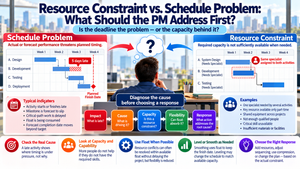
Resource Constraint vs. Schedule Problem: What Should the PM Address First?
Learn how to distinguish a resource constraint from a schedule problem in PMP exam scenarios. Understand how capacity, capability, float, resource leveling, and resource smoothing help determine what is actually driving schedule pressure—and what the project manager should address first.
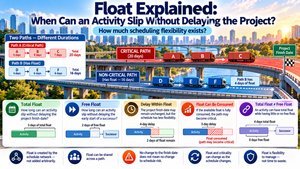
Float Explained: When Can an Activity Slip Without Delaying the Project?
Learn how float works in PMP exam scenarios, including the difference between total float and free float. Understand how delays consume schedule flexibility, affect successor activities and the project finish date, and can cause a non-critical path to become critical.

Fast Tracking vs. Crashing: Which Schedule Compression Technique Fits?
Learn how to choose between fast tracking and crashing in PMP exam scenarios. Understand how the critical path, activity dependencies, resource availability, cost, and risk determine which schedule compression technique fits — and why shortening an activity does not always shorten the project.

Schedule Variance vs. Schedule Forecast: What Is the Difference?
Learn the difference between schedule variance and schedule forecasting in PMP exam scenarios. Understand what SV and SPI reveal about current earned-value performance, why they do not directly predict the project completion date, and how critical path, remaining work, dependencies, and risk shape the schedule forecast.