Project Management
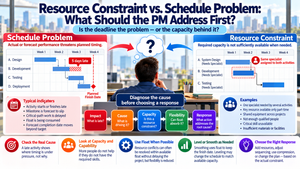
Resource Constraint vs. Schedule Problem: What Should the PM Address First?
Learn how to distinguish a resource constraint from a schedule problem in PMP exam scenarios. Understand how capacity, capability, float, resource leveling, and resource smoothing help determine what is actually driving schedule pressure—and what the project manager should address first.
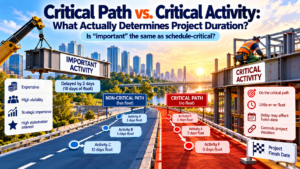
Critical Path vs. Critical Activity: What Actually Determines Project Duration?
Learn the difference between an important activity and a schedule-critical activity in PMP exam scenarios. Understand how the critical path, float, dependencies, and schedule network determine project duration — and why an activity can be expensive, visible, or high-risk without controlling the project finish date.
Gold Plating vs. Value-Adding Change: When “More” Is Not Better on the PMP Exam
Learn how to distinguish gold plating from an appropriately authorized project improvement in PMP exam scenarios. Use the Project Reasoning Lab SCOPE Check to evaluate scope, change, decision authority, project environment, value, and impact before deciding what should happen next.
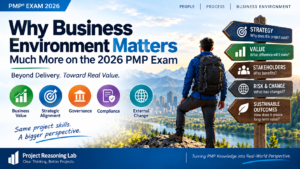
Why Business Environment Matters Much More on the 2026 PMP Exam
Discover why the Business Environment domain matters much more on the 2026 PMP exam. Learn how to think beyond scope, schedule, and cost by evaluating business value, strategic alignment, governance, compliance, and changes in the external environment.
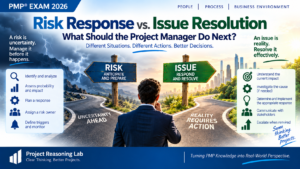
Risk Response vs. Issue Resolution: What Should the Project Manager Do Next?
Learn how to distinguish risk response from issue resolution in PMP exam scenarios and determine what the project manager should do next. Use the Project Reasoning Lab TRACE Check to evaluate the situation, existing responses, authority, impact, and the action that logically belongs next.
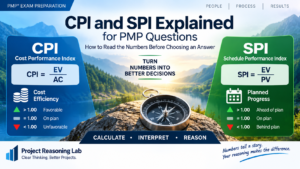
CPI and SPI Explained for PMP Questions: How to Read the Numbers Before Choosing an Answer
Learn how to interpret CPI and SPI in PMP exam questions without relying on formula memorization alone. Understand cost efficiency and schedule performance, use 1.00 as the key reference point, and apply a practical four-step reasoning framework to calculate, interpret, and choose the right response.
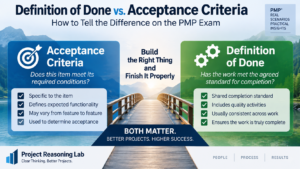
Definition of Done vs. Acceptance Criteria: How to Tell the Difference on the PMP Exam
Learn how to distinguish Acceptance Criteria from the Definition of Done in PMP exam scenarios. Use the Project Reasoning Lab Two-Lens Test to determine whether an item meets its specific requirements, whether the work is truly complete, and which concept the scenario is actually testing.
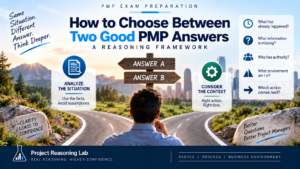
How to Choose Between Two Good PMP Answers: A Reasoning Framework
Learn how to choose between two good PMP answers using a practical reasoning framework. Identify what has already happened, avoid unsupported assumptions, consider authority and project context, and determine which action logically comes next.
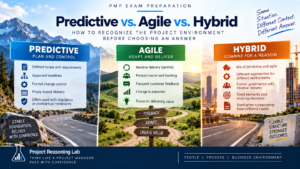
Predictive vs. Agile vs. Hybrid: How to Recognize the Project Environment Before Choosing an Answer
Learn how to recognize predictive, agile, and hybrid project environments in PMP exam scenarios—and why the same situation can require a different answer depending on requirements, change, authority, and delivery context.
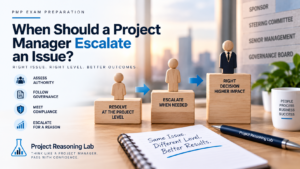
When Should a Project Manager Escalate an Issue?
When should a project manager resolve an issue directly, and when should it be escalated? Learn four key escalation signals and a practical reasoning framework for choosing the right action in PMP exam scenarios.